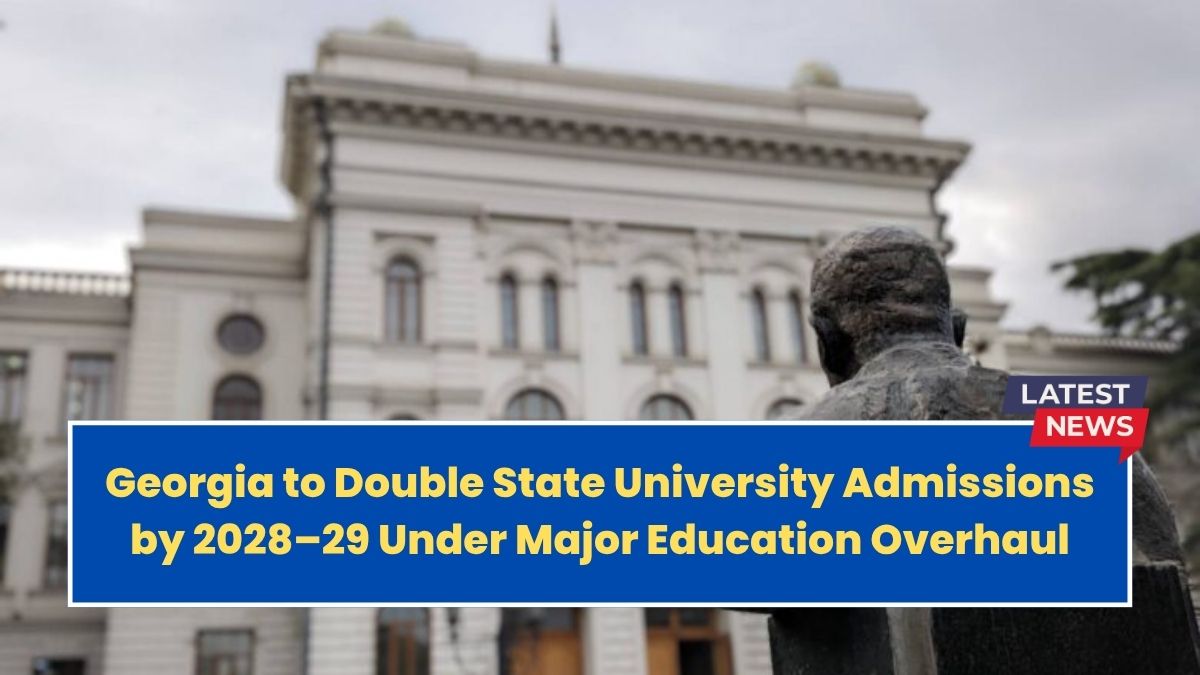
In a significant shift for higher education, Georgia is preparing to double admissions at state universities for the 2028–2029 academic year. The move comes as part of sweeping reforms introduced by the ruling Georgian Dream government, aimed at restructuring both school and university systems.
According to the Education Ministry’s March 25 announcement, the increase in student intake will affect both bachelor’s and master’s programs, driven by overlapping graduation cycles and shorter academic timelines.
Why Admissions Will Surge
The government explained that bachelor’s program quotas will rise sharply because students from both 11th and 12th grades will graduate simultaneously. This unusual overlap is a direct result of upcoming school reforms.
At the same time, master’s program admissions will also double. This is largely because most undergraduate degrees are being shortened, meaning multiple cohorts will complete their studies around the same time.
Shorter Degrees and Flexible Schooling
Under the new reform plan:
- The traditional 12-year school system will be reduced to 11 years, starting from 2028–29
- The 12th grade will become optional, not mandatory
- A preparatory “repetitorium” program will support 11th-grade students for the Unified National Examinations
- Most university bachelor’s degrees will shift from four years to three years
This change means students entering university in 2024 and 2025 are expected to graduate together, further contributing to the spike in postgraduate demand.
Major Changes in Universities
The reform doesn’t stop at admissions. The government is planning a broader transformation of higher education, including:
- A shift from the current 4+2 system (bachelor’s + master’s) to a 3+1 model
- Decentralization of universities away from the capital
- Implementation of a “one city – one faculty” system, assigning specific disciplines to specific locations
In schools, additional rules are also being introduced, such as:
- Standardized, state-approved textbooks
- Mandatory uniforms for younger students (grades 1–6)
- A ban on mobile phones during classroom hours
Controversy and Backlash
Despite the ambitious goals, the reforms have sparked serious concerns. Critics warn about potential academic centralization, reduced access to diverse programs, and possible impacts on international study recognition.
One of the most controversial decisions affected Ilia State University, where nearly 92% of academic programs were eliminated, leaving only teaching-related and select STEM courses. The move triggered protests from both students and faculty.
Earlier, the government also proposed merging Georgian Technical University and Ivane Javakhishvili Tbilisi State University—two of the country’s most prominent institutions—but later withdrew the plan following widespread opposition.
What Lies Ahead
While officials argue that these reforms will modernize Georgia’s education system and improve efficiency, many remain skeptical about their long-term impact. With structural changes affecting everything from school years to university programs, the 2028–29 academic cycle is expected to be one of the most transformative—and challenging—periods in Georgia’s education history.