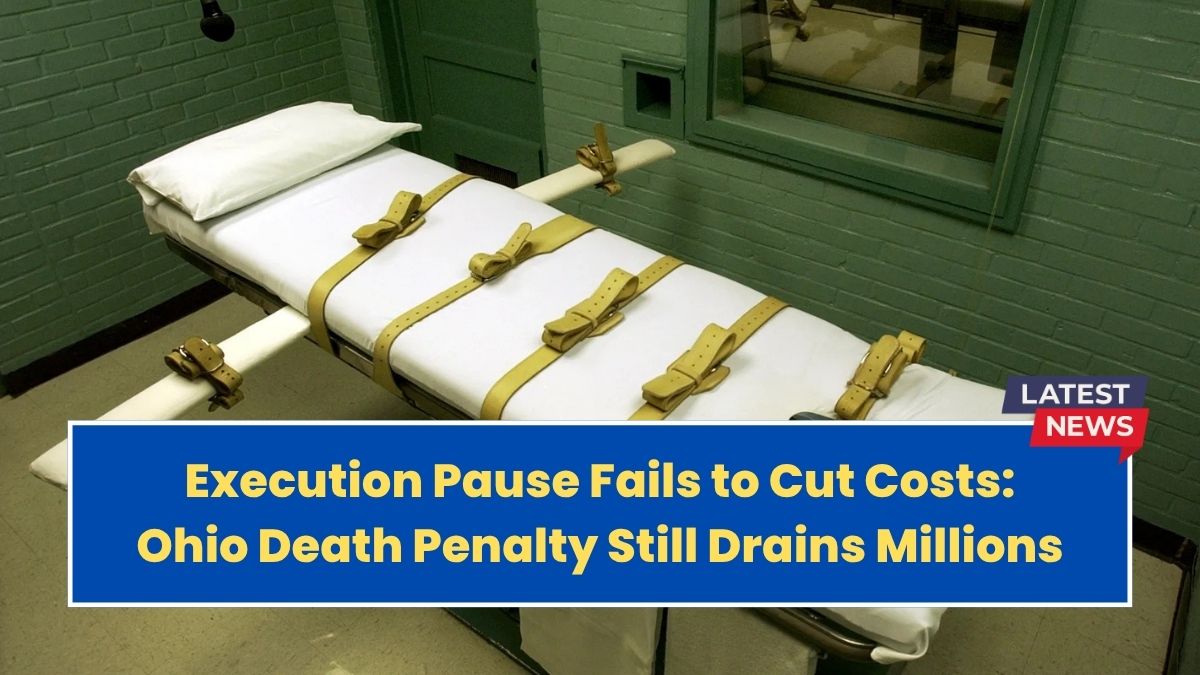
The death penalty has long been one of the most controversial aspects of the American criminal justice system, not only for ethical reasons but also for its financial implications. In Ohio, an ongoing execution pause was expected by some to reduce the financial strain associated with capital punishment.
However, recent findings and analyses suggest otherwise. Despite halting executions, the state continues to spend millions of dollars each year maintaining death row inmates, funding prolonged legal battles, and supporting a complex system that remains largely inactive in terms of carrying out sentences. This paradox raises critical questions about whether the death penalty, in its current suspended state, serves any practical purpose or merely drains public resources without delivering justice efficiently.
The Cost of Maintaining Death Row

Even without executions being carried out, maintaining death row facilities and inmates comes at a high cost. Death row prisoners are typically housed in higher-security conditions than the general prison population, requiring more staff, surveillance, and specialized infrastructure. These additional requirements significantly increase operational expenses for the state.
Key cost factors include:
- Enhanced security staffing and monitoring systems
- Separate housing units for death row inmates
- Increased healthcare and mental health services
- Administrative oversight specific to capital cases
These costs persist regardless of whether executions take place. As a result, the execution pause has done little to alleviate the financial burden, as the infrastructure and personnel remain in place.
Expensive Legal Proceedings Continue

One of the most significant contributors to the high cost of the death penalty is the lengthy and complex legal process involved. Capital cases require extensive investigations, expert witnesses, and multiple layers of appeals, all of which are funded by taxpayers.
Even during the execution pause, these legal proceedings have not stopped. In fact, many cases continue to move through the appeals process, adding to the overall expense. Public defenders, prosecutors, and courts all dedicate substantial time and resources to these cases.
Major legal cost drivers include:
- Pre-trial investigations and jury selection
- Trial proceedings with extended durations
- Mandatory appeals and post-conviction reviews
- Federal court involvement in certain cases

These ongoing legal costs mean that the financial impact of the death penalty extends far beyond the execution itself, making the pause largely ineffective in reducing expenditures.
Delays and Uncertainty Add to the Burden
The indefinite nature of the execution pause has created a system filled with uncertainty. Inmates remain on death row for decades, often without a clear timeline for resolution. This prolonged detention increases costs over time and complicates the administration of justice.
Long delays also mean that cases remain active for years, requiring continuous legal attention and updates. Evidence must be preserved, witnesses may need to be re-interviewed, and legal teams must stay engaged. All of this contributes to rising costs.
Additionally, uncertainty affects victims’ families, who may endure years of emotional strain while waiting for closure. This human cost, while difficult to quantify, adds another layer to the debate over the effectiveness of the death penalty system.
Comparison with Life Imprisonment
Studies have consistently shown that sentencing individuals to life imprisonment without parole is significantly less expensive than pursuing the death penalty. Life sentences eliminate many of the costly legal procedures associated with capital punishment, particularly the extensive appeals process.
Advantages of life imprisonment include:
- Reduced legal and court-related expenses
- Lower security costs compared to death row
- Elimination of execution-related procedures
- Faster case resolution and finality
In contrast, the death penalty system requires ongoing investment with little return in terms of completed executions, especially during a pause. This comparison has led many policymakers and analysts to question whether the death penalty is a financially viable option.
Political and Public Debate
The financial inefficiency of the death penalty in Ohio has sparked ongoing debate among lawmakers, legal experts, and the public. Some argue that the system should be reformed to reduce costs, while others advocate for its complete abolition.
Supporters of abolition point to:
- The high financial burden on taxpayers
- The lack of executions despite ongoing costs
- Concerns about wrongful convictions
- Ethical and moral considerations
On the other hand, proponents of the death penalty argue that it serves as a deterrent and provides justice for the most serious crimes. However, the execution pause has weakened this argument, as the lack of enforcement calls into question its effectiveness.
Attempts at Reform
Efforts have been made to address the rising costs associated with the death penalty in Ohio. Some proposals include streamlining the appeals process, reducing the number of capital cases, or modifying sentencing guidelines.
However, implementing these reforms has proven challenging. Legal safeguards are in place to ensure fair trials and prevent wrongful convictions, and reducing these protections could lead to serious consequences. As a result, cost-cutting measures are often limited in scope and impact.
Other reform ideas include:
- Limiting the use of the death penalty to the most extreme cases
- Increasing transparency in cost reporting
- Exploring alternative sentencing options
- Investing in crime prevention programs
While these measures may help reduce costs to some extent, they do not fully address the fundamental issue of maintaining an expensive system with limited outcomes.
Broader Implications for the Justice System
The continued expense of the death penalty during an execution pause has broader implications for the criminal justice system. Resources allocated to capital punishment could potentially be redirected to other areas, such as law enforcement, rehabilitation programs, or victim support services.
This reallocation could lead to more effective use of public funds and improved outcomes in terms of public safety and community well-being. The current situation highlights the need for a careful evaluation of priorities within the justice system.
Moreover, the financial strain of the death penalty may disproportionately affect state budgets, limiting the ability to invest in other critical areas such as education and healthcare.
Conclusion
The execution pause in Ohio was expected to reduce the financial burden of the death penalty, but the reality has proven quite different. Despite the lack of executions, the state continues to spend millions on maintaining death row, funding extensive legal proceedings, and managing a system marked by delays and uncertainty.
The ongoing costs, combined with the limited outcomes, have intensified the debate over the future of capital punishment in the state. As policymakers and the public consider the path forward, the financial inefficiency of the current system cannot be ignored. Whether through reform or abolition, addressing these challenges will be essential to creating a more effective and sustainable justice system.