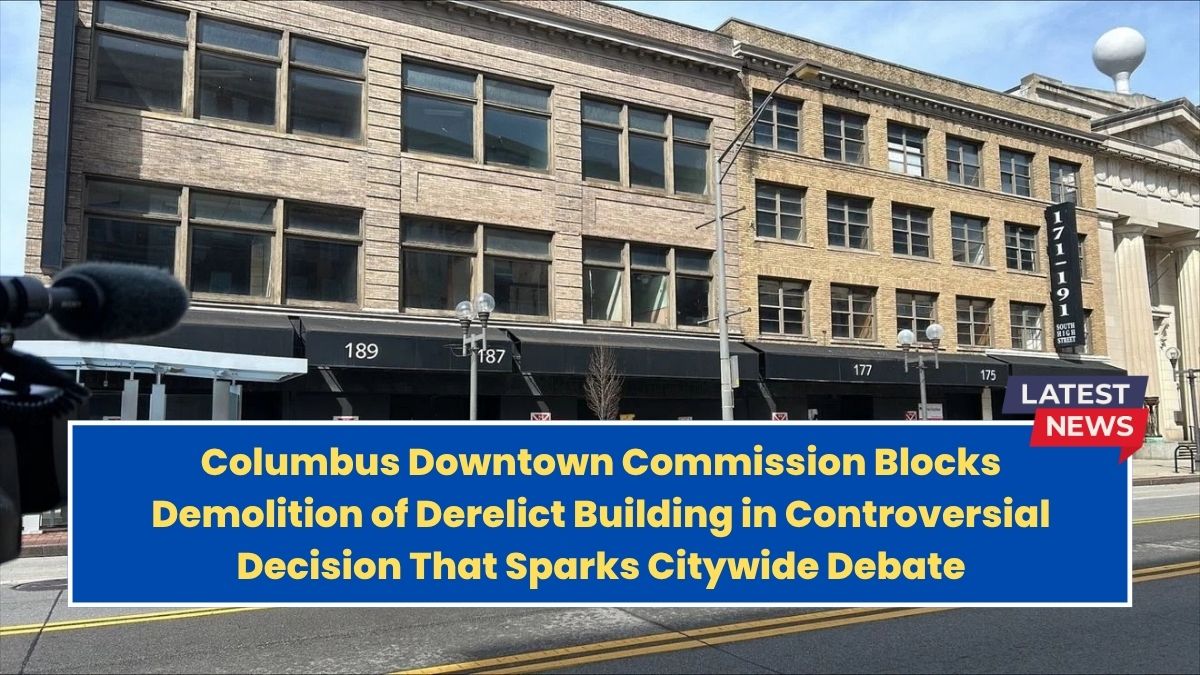
A major controversy is unfolding in the heart of Columbus after the Columbus Downtown Commission voted to block the demolition of a long-neglected building. What might have been a routine urban development decision has quickly escalated into a citywide debate involving preservationists, developers, residents, and local officials.
At the center of the issue is a crumbling structure that many consider unsafe and unsightly, while others argue it holds historical and architectural value worth saving. This decision has not only delayed redevelopment plans but also ignited broader discussions about how cities should balance progress with preservation in an era of rapid urban change.
The Building at the Center of the Controversy

The building in question has stood vacant for years, its deteriorating façade becoming a familiar yet troubling sight for downtown residents and visitors. Once a symbol of economic activity, it now represents decay and neglect. Reports indicate structural damage, broken windows, and potential safety hazards that have raised concerns among nearby businesses and pedestrians.
Despite its condition, some community members argue that the building has significant historical importance. They claim it reflects a particular architectural era that is increasingly disappearing from the city’s landscape. For preservation advocates, demolishing the structure would mean erasing a piece of Columbus’s identity.
Why the Commission Blocked Demolition
The decision by the commission did not come lightly. After reviewing proposals and hearing arguments from multiple stakeholders, officials concluded that demolition was not the best immediate course of action.

Key reasons behind the decision include:
- Historical significance: The building may qualify for preservation status due to its age and design.
- Potential for restoration: Experts suggested that renovation could be feasible, albeit costly.
- Urban character concerns: Removing the building could alter the visual and cultural fabric of the downtown area.
- Community input: Several residents and advocacy groups voiced strong opposition to demolition during public hearings.
Commission members emphasized that their role is not just to approve development projects but to ensure that changes align with long-term urban planning goals.
Developers Push Back
Developers involved in the project have expressed frustration with the decision. They argue that the building’s condition makes restoration impractical and financially unviable. According to them, demolition would pave the way for new investments that could revitalize the area and create jobs.

Their main arguments include:
- Safety risks: The structure poses potential dangers that could worsen over time.
- Economic opportunity: A new development could generate revenue and attract businesses.
- High renovation costs: Restoring the building may require significantly more resources than rebuilding.
- Delayed progress: The decision stalls projects that could benefit the community.
Developers also warn that prolonged delays might discourage future investments in the downtown area, potentially impacting economic growth.
Community Reactions and Divided Opinions
The commission’s decision has sparked intense reactions across Columbus. Residents, business owners, and local organizations are sharply divided on what should happen next.
Supporters of the decision argue that preserving historic structures adds character and uniqueness to the city. They believe that once such buildings are gone, they cannot be replaced, and future generations will lose a tangible connection to the past.
On the other hand, critics see the decision as impractical. They question whether preserving a deteriorating building is worth the risks and costs, especially when the city faces other pressing needs such as housing and infrastructure development.
Some of the most common viewpoints include:
- Preservation supporters: Emphasize cultural heritage and architectural value.
- Modernization advocates: Focus on safety, economic growth, and urban renewal.
- Local businesses: Concerned about the impact on foot traffic and neighborhood appeal.
- Residents: Divided between nostalgia and practicality.
Broader Implications for Urban Development
This case goes beyond a single building. It highlights a broader challenge faced by many growing cities: how to balance preservation with progress. As urban areas expand and evolve, decisions like this become increasingly complex.
Key issues raised by this debate include:
- Defining historical value: What qualifies a building as worth saving?
- Cost vs. benefit: How much should cities invest in preservation efforts?
- Community involvement: To what extent should public opinion influence planning decisions?
- Sustainability: Is restoration more environmentally responsible than demolition and new construction?
Urban planners often stress that a balanced approach is essential. Preserving select structures while allowing for modern development can help maintain a city’s identity without hindering growth.
Possible Next Steps
With demolition currently blocked, attention is turning to what happens next. Several options are being discussed by city officials and stakeholders.
These include:
- Revised redevelopment plans: Developers may submit new proposals that incorporate the existing structure.
- Public-private partnerships: Collaboration could help offset restoration costs.
- Historical designation review: The building could receive official protection status.
- Further inspections: Detailed assessments may determine whether restoration is truly viable.
The outcome of these discussions will likely shape not only the future of this building but also how similar cases are handled in the future.
Conclusion
The decision to block the demolition of a derelict building in Columbus has ignited a complex and emotional debate that touches on history, safety, economics, and identity. While some see the move as a victory for preservation, others view it as a setback for progress. What remains clear is that there are no easy answers.
As the city continues to grow and evolve, finding the right balance between honoring the past and embracing the future will be crucial. The resolution of this विवाद will likely set a precedent for how Columbus approaches urban development challenges in the years to come.