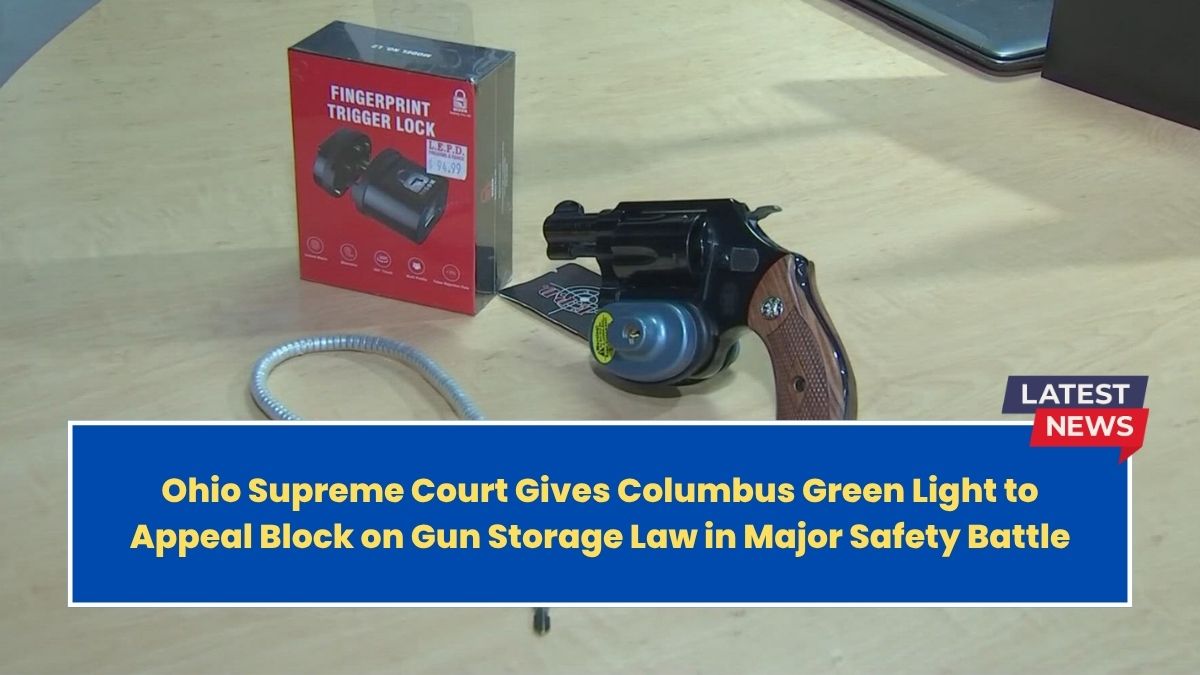
A significant legal development has emerged in the ongoing debate over gun regulation in the United States, as the Ohio Supreme Court has granted the city of Columbus permission to appeal a lower court decision blocking its gun storage law.
This move marks a pivotal moment in the clash between local governments seeking stricter firearm safety measures and state laws that limit their authority. At the heart of the issue lies a fundamental question: should cities have the power to enact their own gun safety rules to protect residents, or should firearm regulation remain exclusively under state control?
Background of the Gun Storage Law

Columbus introduced the gun storage ordinance as part of a broader effort to reduce gun-related accidents, thefts, and youth access to firearms. The law requires gun owners to securely store firearms, particularly in homes where minors may be present. City officials argued that the measure was a common-sense step toward improving public safety without infringing on constitutional rights.
However, opponents quickly challenged the law in court, claiming it conflicted with Ohio’s statewide firearm preemption laws. These laws are designed to ensure uniform gun regulations across the state, preventing a patchwork of local rules that could confuse gun owners.
Key elements of the Columbus gun storage law included:
- Mandatory safe storage of firearms when not in use
- Requirements to prevent access by minors
- Potential penalties for violations leading to harm or unauthorized access
- Emphasis on responsible gun ownership rather than outright restrictions
Legal Challenge and Lower Court Ruling

The legal battle began when gun rights advocates and organizations filed a lawsuit to block the ordinance. They argued that Ohio law clearly prohibits municipalities from enacting their own firearm regulations, including storage requirements.
A lower court sided with the challengers, ruling that Columbus had overstepped its authority. The decision effectively halted enforcement of the gun storage law, dealing a major setback to the city’s efforts to address gun violence through local legislation.
The ruling highlighted the tension between:
- State preemption laws that centralize gun regulation
- Local governments’ desire to respond to community-specific safety concerns
- Constitutional debates surrounding the Second Amendment
Ohio Supreme Court’s Decision to Allow Appeal

In a crucial turn of events, the Ohio Supreme Court has now allowed Columbus to appeal the lower court’s decision. This does not mean the law is immediately reinstated, but it gives the city an opportunity to argue its case at the highest judicial level in the state.
Legal experts view this as a significant development because it signals that the court is willing to examine the broader implications of the case. The decision could ultimately redefine the balance of power between state and local governments in Ohio when it comes to firearm regulation.
The appeal process will likely focus on:
- Whether the gun storage law truly conflicts with state statutes
- The extent of municipal authority under Ohio law
- Public safety considerations versus uniform regulation
Public Safety vs. State Authority
The case has sparked intense debate among policymakers, legal scholars, and the public. Supporters of the Columbus ordinance argue that local leaders are best positioned to address the unique safety challenges facing their communities. They believe that secure storage laws can prevent accidental shootings, suicides, and thefts that often lead to illegal gun use.
On the other hand, critics warn that allowing cities to create their own gun laws could lead to inconsistency and confusion. They argue that gun owners traveling between cities might unknowingly violate different local regulations.
Supporters emphasize:
- Reducing child access to firearms
- Preventing accidental shootings in homes
- Lowering rates of stolen guns entering illegal markets
Opponents highlight:
- The need for consistent statewide gun laws
- Concerns about overregulation
- Potential legal conflicts with existing state statutes
Broader Implications of the Case
This legal battle extends beyond Columbus and could have far-reaching consequences across Ohio and potentially other states with similar laws. If the Ohio Supreme Court ultimately rules in favor of Columbus, it could open the door for other municipalities to enact their own gun safety measures.
Such a decision might encourage cities to adopt:
- Safe storage requirements
- Local reporting mandates for lost or stolen firearms
- Additional safety-focused ordinances
Conversely, if the court upholds the lower court’s ruling, it would reinforce the authority of state preemption laws and limit the ability of cities to address gun safety independently.
Political and Social Context
The case comes at a time when gun violence remains a deeply polarizing issue in the United States. Communities across the country are grappling with how to balance individual rights with collective safety.
In Columbus, city officials have pointed to rising concerns about gun-related incidents as justification for their ordinance. Meanwhile, advocacy groups on both sides of the debate are closely watching the case, recognizing its potential to set a legal precedent.
The political landscape surrounding the issue includes:
- Ongoing national debates over gun control
- Increased focus on community-level safety initiatives
- Legal challenges testing the limits of local authority
What Happens Next
With the appeal now moving forward, the Ohio Supreme Court will review legal arguments from both sides before issuing a final decision. The timeline for this process could extend over several months, depending on the complexity of the case and the court’s schedule.
During this period:
- The blocked law remains unenforced
- Both sides will submit detailed legal briefs
- Oral arguments may be scheduled
- The court will deliberate before issuing a ruling
The outcome will be closely monitored not only in Ohio but across the nation, as similar legal battles continue to unfold in other jurisdictions.
Conclusion
The Ohio Supreme Court’s decision to allow Columbus to appeal the block on its gun storage law represents a critical moment in the ongoing struggle between local initiative and state authority. While the final outcome remains uncertain, the case underscores the complexity of balancing public safety concerns with legal and constitutional frameworks.
As the legal process continues, the ruling will likely shape the future of gun regulation in Ohio and potentially influence broader national discussions. Whether it leads to expanded local powers or reinforces state control, the decision will have lasting implications for policymakers, communities, and gun owners alike.