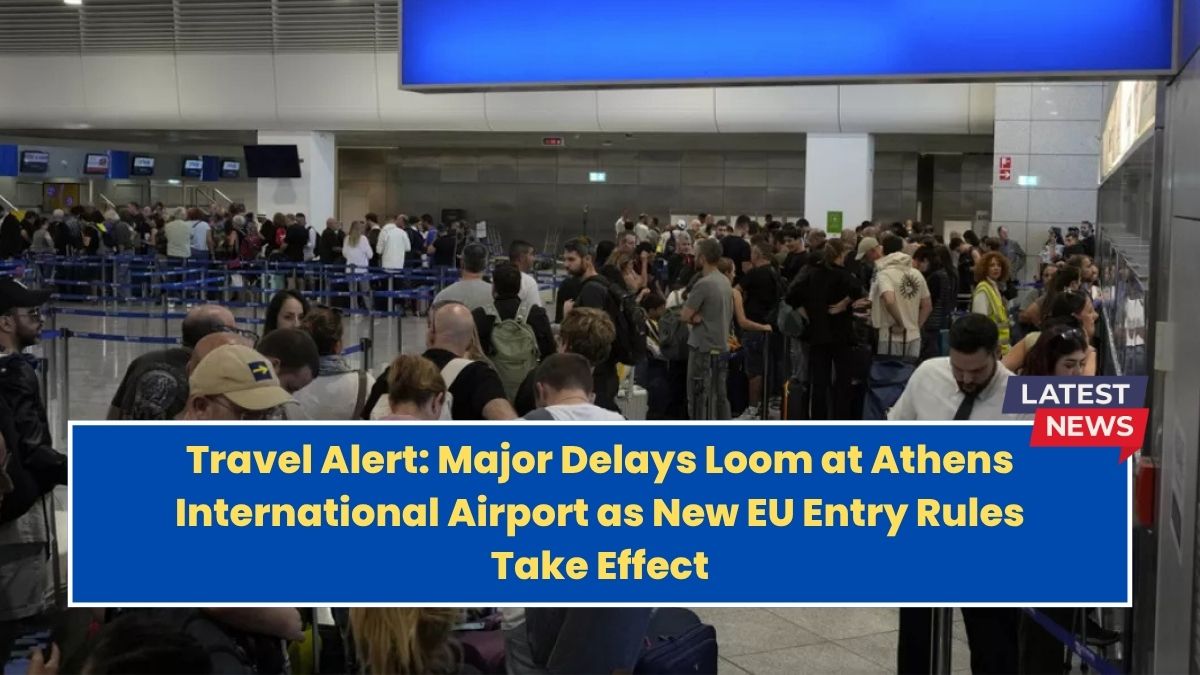
Travelers heading to Greece and other European destinations are being warned to prepare for significant delays as new European Union entry regulations are rolled out. At the center of the disruption is Athens International Airport, one of the busiest travel hubs in Southern Europe. With thousands of passengers passing through daily, even minor procedural changes can create major bottlenecks—but the latest rules are anything but minor.
The new system, part of a broader EU initiative to strengthen border security and streamline entry processes, is expected to impact non-EU travelers the most. As implementation begins, long queues, extended wait times, and confusion among passengers are already being reported.
What Are the New EU Entry Rules?

The European Union has introduced a new digital border management system known as the Entry/Exit System (EES). This system replaces traditional passport stamping with biometric data collection, including fingerprints and facial recognition.
Key features of the new rules include:
- Mandatory biometric registration for non-EU travelers
- Digital tracking of entry and exit dates
- Automated alerts for overstaying visas
- Removal of manual passport stamping
The goal is to improve border efficiency and security, but the transition phase is proving challenging, particularly at high-traffic airports like Athens.
Why Athens International Airport Is Facing Major Delays
Athens International Airport serves as a major gateway for tourists visiting Greece’s islands and historical landmarks. With the rollout of the EES system, the airport is experiencing operational strain.
Several factors are contributing to delays:
- High passenger volume: Athens sees millions of travelers annually, especially during peak tourist seasons
- Learning curve: Airport staff and travelers are still adapting to the new system
- Technical setup: Installation and calibration of biometric scanners are ongoing
- Increased processing time: Each passenger now requires additional verification steps
Passengers have reported waiting times exceeding two hours at immigration checkpoints, particularly during peak arrival periods.
Who Will Be Affected the Most?
The new rules primarily affect travelers from countries outside the European Union. This includes visitors from nations such as the United States, the United Kingdom, India, and others.
Groups most impacted include:
- First-time visitors to the EU
- Families traveling with children
- Elderly passengers unfamiliar with biometric systems
- Tour groups arriving simultaneously
EU citizens and residents are generally exempt from the biometric registration process, allowing them to pass through more quickly.
What Travelers Can Expect at the Airport
Passengers arriving at Athens International Airport should be prepared for a more structured but slower entry process.
Here’s what to expect:
- Biometric kiosks: Travelers will need to scan their passports and provide fingerprints and facial images
- Queue management: Separate lines for EU and non-EU travelers
- Assistance stations: Staff available to guide passengers through the new system
- Potential system glitches: As with any new technology, occasional delays due to technical issues
Travelers are advised to remain patient and cooperative during the process.
Tips to Avoid Delays and Travel Smoothly
While delays may be unavoidable in the short term, there are several steps travelers can take to minimize disruption:
- Arrive early: Plan extra time for immigration and security checks
- Prepare documents: Keep passports and travel documents easily accessible
- Follow instructions: Pay attention to airport signage and staff guidance
- Travel off-peak: If possible, choose flights during less busy hours
- Stay informed: Check for updates from airlines and airport authorities
Being proactive can make a significant difference in navigating the new procedures.
Broader Impact on European Travel
The implementation of the Entry/Exit System (EES) is not limited to Athens. Airports across Europe, including those in Paris, Rome, and Madrid, are expected to face similar challenges.
Potential wider effects include:
- Flight delays due to late passenger processing
- Missed connections for transit travelers
- Increased pressure on airport staff and infrastructure
- Temporary decline in traveler satisfaction
However, EU officials emphasize that these issues are temporary and part of a necessary transition toward a more secure and efficient system.
Airline and Airport Responses
Airlines and airport authorities are actively working to manage the situation. At Athens International Airport, additional staff have been deployed, and temporary measures are being introduced to ease congestion.
These include:
- Extra help desks for passenger assistance
- Real-time updates on wait times
- Coordination with airlines to manage passenger flow
- Increased signage and multilingual support
Airlines are also advising passengers to check in early and be prepared for possible delays upon arrival.
What This Means for Future Travel
Despite the current disruptions, the new system is expected to bring long-term benefits. Once fully operational, the Entry/Exit System (EES) aims to:
- Reduce illegal overstays
- Enhance border security
- Speed up processing through automation
- Improve data accuracy for travel records
Frequent travelers may eventually experience faster and more seamless entry procedures once the system stabilizes.
Conclusion
The introduction of new EU entry rules marks a significant shift in how travelers enter Europe, and Athens International Airport is currently at the forefront of this transition. While the promise of improved security and efficiency is clear, the immediate reality includes longer wait times and potential travel disruptions.
For now, preparation and patience are key. Travelers who plan ahead, stay informed, and allow extra time for airport procedures will be best equipped to handle the changes. As the system matures, these early challenges are expected to fade, paving the way for a more modern and streamlined travel experience across the European Union.