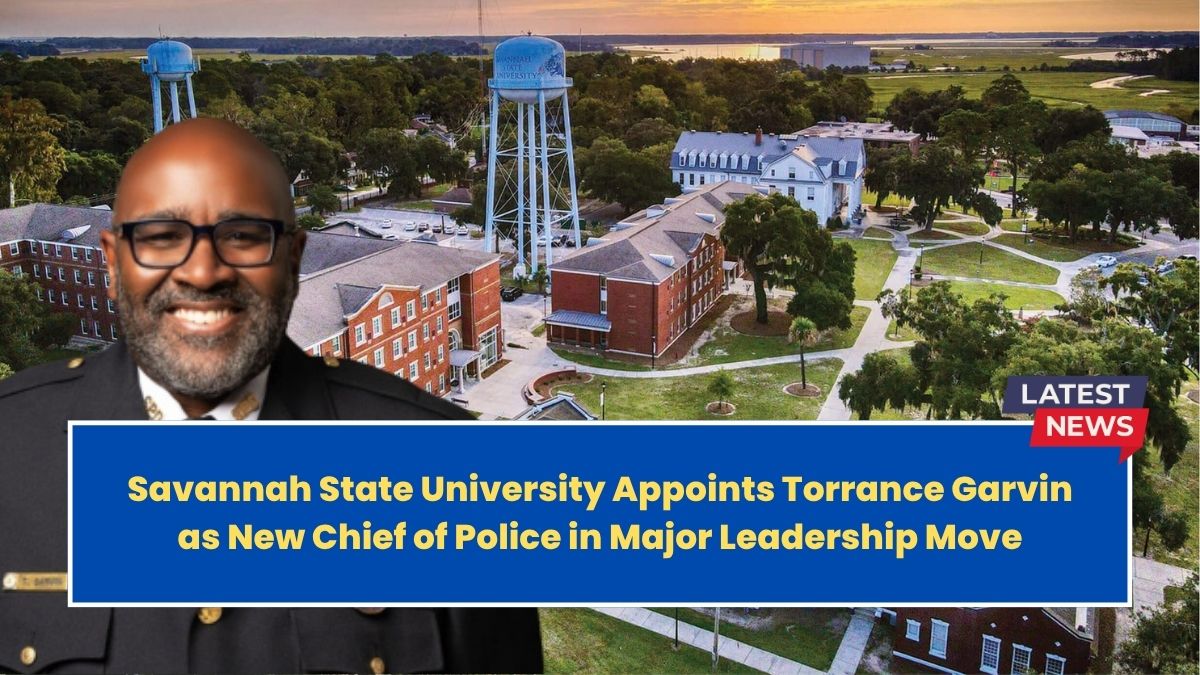
In a decisive step toward strengthening campus security and enhancing community engagement, Savannah State University has appointed Torrance Garvin as its new Chief of Police.
The leadership change signals a renewed focus on safety innovation, transparency, and collaboration between law enforcement and the university community. As institutions across the United States reassess their approach to campus policing, this appointment represents a forward-thinking move aimed at aligning safety with inclusivity and trust.
A Strategic Leadership Appointment

Savannah State University’s decision to bring Torrance Garvin into this pivotal role reflects a broader strategic vision. Universities today face evolving challenges—from ensuring student safety to addressing concerns about policing practices—and leadership plays a crucial role in navigating these complexities.
Garvin’s appointment is not just about filling a position; it is about setting a tone for the future. His leadership is expected to introduce modern policing strategies while fostering a culture of accountability and respect.
Key highlights of the appointment include:
- A focus on community-oriented policing
- Emphasis on student engagement and transparency
- Strengthening emergency preparedness and response systems
- Integration of technology-driven safety solutions
Who Is Torrance Garvin?

Torrance Garvin brings with him a wealth of experience in law enforcement, leadership, and public safety management. Known for his progressive approach, Garvin has built a reputation for bridging the gap between police departments and the communities they serve.
His professional background includes:
- Years of service in municipal and campus policing
- Leadership roles that emphasized ethical policing practices
- Experience in training and mentoring officers
- A track record of implementing crime prevention initiatives
Garvin is widely recognized for prioritizing communication and collaboration. His leadership philosophy centers on the idea that effective policing is rooted in trust, not just enforcement.
Vision for Campus Safety

One of Garvin’s primary goals at Savannah State University is to redefine campus safety in a way that resonates with modern expectations. Rather than relying solely on traditional enforcement methods, his approach emphasizes prevention, education, and partnership.
His vision includes:
- Building stronger relationships with students, faculty, and staff
- Promoting safety awareness through workshops and outreach programs
- Encouraging open dialogue about policing policies and practices
- Enhancing visibility and accessibility of campus officers
This approach aligns with a growing national trend where campus police departments are expected to act as both protectors and partners within the academic community.
Strengthening Community Trust
Trust is a cornerstone of effective campus policing, and Garvin has made it clear that this will be a top priority. In recent years, universities have faced increasing scrutiny over how campus police interact with students, particularly in diverse communities.
Savannah State University, as a historically Black institution, places a unique emphasis on ensuring that its policing practices reflect the values and concerns of its student body.
Garvin aims to:
- Foster inclusive policing practices
- Ensure fair and unbiased enforcement
- Create channels for student feedback and participation
- Maintain transparency in departmental operations
By prioritizing these principles, Garvin hopes to create an environment where students feel both safe and respected.
Embracing Technology and Innovation
Modern campus safety increasingly relies on technology, and Garvin is expected to lead efforts to modernize the university’s policing infrastructure.
Potential advancements under his leadership may include:
- Upgraded surveillance and monitoring systems
- Implementation of mobile safety apps for students
- Data-driven crime analysis to identify and prevent risks
- Enhanced communication systems for emergency alerts
These innovations are designed not only to improve response times but also to proactively address safety concerns before they escalate.
Collaboration With University Stakeholders
Garvin’s success will depend heavily on his ability to collaborate with various stakeholders within the university. This includes administrators, student organizations, faculty members, and local law enforcement agencies.
Key areas of collaboration include:
- Developing campus-wide safety policies
- Coordinating emergency response plans
- Supporting student-led safety initiatives
- Partnering with local authorities for broader community security
Such partnerships are essential for creating a unified approach to safety that extends beyond the campus boundaries.
Addressing Modern Challenges in Campus Policing
The role of a campus police chief has evolved significantly in recent years. Today’s leaders must navigate a complex landscape that includes mental health concerns, social justice issues, and the need for cultural sensitivity.
Garvin is expected to address these challenges by:
- Expanding training programs focused on de-escalation techniques
- Integrating mental health support services into policing strategies
- Promoting diversity and inclusion within the police force
- Encouraging continuous professional development
These efforts are critical for ensuring that campus policing remains effective, equitable, and aligned with the university’s mission.
Student and Faculty Expectations
The appointment of a new police chief often brings heightened expectations from the campus community. Students and faculty at Savannah State University are likely to look for tangible changes that reflect Garvin’s vision.
Common expectations include:
- Increased officer engagement on campus
- Clear communication during emergencies
- Greater involvement in student life and activities
- Transparent handling of incidents and investigations
Meeting these expectations will be key to establishing Garvin’s credibility and building long-term trust.
A Step Toward the Future
Savannah State University’s leadership decision comes at a time when higher education institutions are reimagining their approach to safety and security. By appointing Torrance Garvin, the university is signaling its commitment to progress, accountability, and community well-being.
This move is expected to:
- Enhance the university’s reputation for safety
- Attract students seeking a secure learning environment
- Strengthen ties between the campus and the surrounding community
- Set a benchmark for other institutions to follow
Conclusion
The appointment of Torrance Garvin as Chief of Police marks a significant milestone for Savannah State University. It reflects a proactive approach to campus safety—one that prioritizes trust, innovation, and collaboration. As Garvin steps into his new role, the university community will be watching closely, hopeful that his leadership will bring meaningful and lasting improvements.
With a clear vision and a strong foundation of experience, Garvin has the opportunity to redefine what campus policing looks like in today’s world. If successful, his tenure could serve as a model for institutions nationwide, demonstrating how thoughtful leadership can transform safety into a shared responsibility built on mutual respect and understanding.