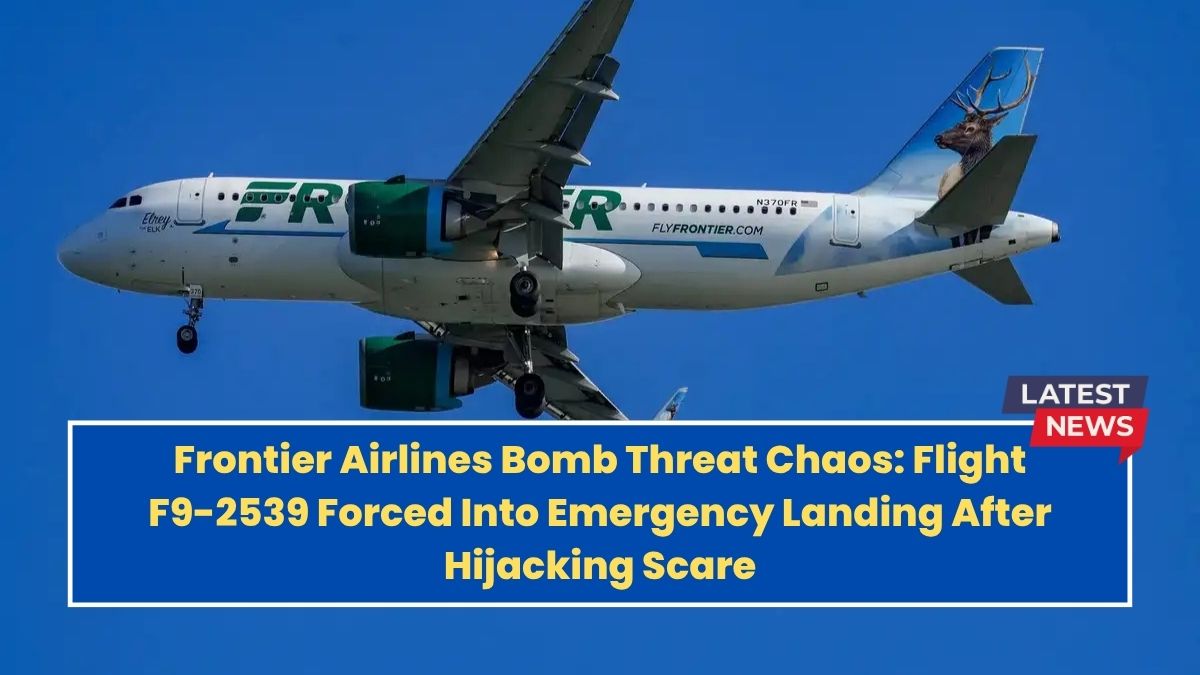
Air travel is often considered one of the safest modes of transportation, but occasional security scares remind passengers and authorities alike of the vulnerabilities that still exist. A recent incident involving Frontier Airlines has sparked widespread concern after Flight F9-2539 was forced into an emergency landing due to a bomb threat and suspected hijacking situation.
The unfolding chaos onboard created panic among passengers and crew, while authorities scrambled to respond swiftly and safely. This article explores what happened, how it was handled, and what it means for aviation security moving forward.
What Happened on Flight F9-2539

The incident began as a routine domestic flight, with passengers boarding Flight F9-2539 expecting a normal journey. However, mid-flight, the situation took a dramatic turn when a potential bomb threat was reported.
- A suspicious message or behavior reportedly alerted crew members
- Concerns quickly escalated into a possible hijacking scare
- The flight crew immediately followed emergency protocols
- Air traffic control was notified, and a diversion plan was activated
Passengers onboard described a tense atmosphere, with flight attendants attempting to maintain calm while quietly coordinating with the cockpit. The captain made a brief announcement indicating an unexpected landing due to a “security concern,” which heightened anxiety among travelers.
Emergency Landing and Immediate Response
The aircraft was diverted to the nearest suitable airport, where emergency services were already on standby. The landing itself was carried out safely, but the situation on the ground remained highly sensitive.
- Law enforcement agencies surrounded the aircraft upon arrival
- Bomb disposal units and security teams were deployed
- Passengers were evacuated in a controlled manner
- The suspect or source of the threat was isolated for questioning

Authorities prioritized safety, ensuring that every passenger and crew member was escorted off the plane without incident. Despite the fear and uncertainty, no injuries were reported during the evacuation.
Passenger Experience During the Scare
For those onboard, the experience was both frightening and surreal. Many passengers later shared their accounts of the ordeal.
- Some reported seeing increased crew movement and whispered conversations
- Others noticed heightened security measures mid-flight
- A few passengers used mobile devices to inform family members
- Emotional reactions ranged from panic to silent anxiety
One passenger described the moment as “the longest flight of my life,” highlighting how uncertainty amplified the fear. Another noted that the professionalism of the crew helped prevent a full-scale panic.
Role of the Flight Crew

The flight crew played a crucial role in managing the crisis effectively. Their training and composure were key factors in ensuring a safe outcome.
- Maintained calm communication with passengers
- Followed strict aviation security protocols
- Coordinated closely with ground authorities
- Ensured orderly evacuation procedures
Their ability to handle such a high-pressure situation demonstrates the importance of rigorous training in aviation safety.
Investigation and Findings
Following the emergency landing, authorities launched a full investigation into the bomb threat and hijacking scare.
- Security teams thoroughly inspected the aircraft
- Passenger luggage and cargo were examined
- The individual linked to the threat was detained and questioned
- Authorities assessed whether the threat was credible or a hoax
Initial reports suggested that the incident may have been a false alarm, but officials treated it with the highest level of seriousness. Even unverified threats in aviation are considered critical due to the potential risks involved.
Impact on Airline Operations
Incidents like this have a ripple effect on airline operations and the broader aviation industry.
- Flight schedules may experience delays or cancellations
- Additional security checks can slow down boarding processes
- Airlines may face reputational challenges
- Increased scrutiny from aviation regulators
For Frontier Airlines, the incident underscores the importance of maintaining robust security measures while ensuring passenger confidence.
Aviation Security Measures in Focus
This event has reignited discussions about aviation security and the need for constant vigilance.
- Enhanced screening procedures at airports
- Improved communication between crew and ground control
- Use of advanced technology to detect threats
- Ongoing training for handling emergency scenarios
While aviation security has evolved significantly over the years, incidents like this highlight that threats—real or perceived—still require immediate and effective responses.
Psychological Effects on Passengers
Beyond the physical safety measures, such incidents can leave lasting psychological impacts on passengers.
- Increased fear of flying among affected travelers
- Stress and anxiety during future flights
- Need for reassurance and support from airlines
- Greater awareness of onboard safety procedures
Airlines often provide counseling support or follow-up communication to help passengers cope after such traumatic experiences.
Lessons Learned from the Incident
Every aviation incident provides valuable insights that can help improve safety standards.
- Importance of rapid response to potential threats
- Value of clear communication during emergencies
- Need for continuous training and preparedness
- Role of passenger cooperation in crisis situations
These lessons contribute to making future flights safer and more secure.
Conclusion
The bomb threat and hijacking scare involving Frontier Airlines Flight F9-2539 serves as a stark reminder of the unpredictable nature of aviation security challenges. While the situation was ultimately resolved without physical harm, the emotional impact on passengers and the operational implications for the airline are significant.
The swift response by the flight crew and authorities highlights the effectiveness of established safety protocols, but it also emphasizes the need for ongoing vigilance. As air travel continues to grow, ensuring passenger safety—both physically and psychologically—remains a top priority for airlines and regulators worldwide.