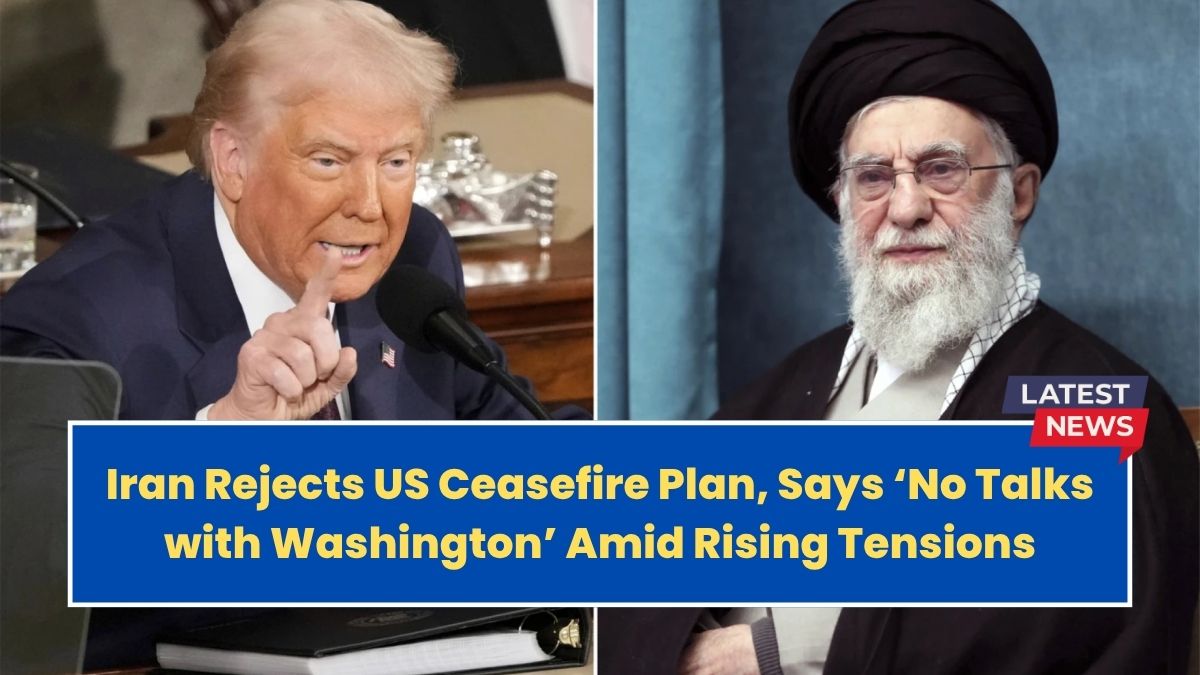
Tehran/Washington, March 25, 2026 — Iran has firmly rejected a ceasefire proposal put forward by the United States, declaring that it will not engage in negotiations with Washington as tensions between the two nations continue to escalate sharply.
Iranian officials dismissed reports of ongoing diplomacy, contradicting claims by U.S. President Donald Trump that “productive talks” were underway. Tehran has instead maintained that no direct or indirect discussions are taking place, accusing Washington of misrepresenting the situation.

The rejection comes amid reports that the U.S. proposed a multi-point peace framework aimed at halting hostilities, easing sanctions, and placing limits on Iran’s nuclear and missile programs. However, Iranian authorities have expressed deep skepticism, describing the plan as unreliable and politically motivated.
‘No Talks Under Pressure’
Iran’s leadership has reiterated a long-standing position: negotiations cannot occur under military pressure. Officials pointed to recent U.S. and allied airstrikes as a major obstacle to diplomacy, arguing that past talks have been followed by military escalation rather than resolution.
Foreign policy insiders in Tehran say the country is only willing to consider dialogue if strict conditions are met, including a halt to attacks, guarantees against future aggression, and compensation for damages.
This hardened stance reflects growing influence from Iran’s military leadership, particularly the Islamic Revolutionary Guard Corps (IRGC), which is reportedly playing a central role in decision-making during the ongoing conflict.
Conflicting Narratives Deepen Uncertainty
The diplomatic deadlock has been further complicated by sharply conflicting narratives from both sides. While Washington insists that communication channels remain open—often through intermediaries such as Pakistan, Turkey, and Egypt—Iran has categorically denied any such engagement.
Analysts warn that this disconnect is fueling uncertainty and raising the risk of miscalculation. “When both sides publicly deny each other’s claims, it creates a dangerous vacuum where intentions are unclear,” said a Middle East policy expert familiar with the situation.
Regional and Global Implications
The standoff is unfolding against the backdrop of ongoing military exchanges and rising geopolitical stakes in the Middle East. Iran has continued missile and drone operations, while the U.S. maintains military pressure in the region.
One of the most critical flashpoints remains the Strait of Hormuz, a vital global oil transit route. Iran has hinted that continued instability could disrupt energy supplies, potentially impacting global markets.
Meanwhile, mediation efforts by regional powers have intensified, with Islamabad emerging as a possible venue for indirect talks. However, no breakthrough has been achieved so far.
Outlook
With both sides entrenched in their positions, prospects for a near-term ceasefire appear increasingly slim. Iran’s outright rejection of the U.S. proposal and its insistence on preconditions for talks suggest that diplomatic progress will remain difficult in the coming days.
As tensions persist, the international community faces mounting pressure to prevent further escalation—one that could have far-reaching consequences beyond the region.